
Welcome to WordPress. This is your first post. Edit or delete it, then start writing!
How AI Is Transforming Everyday Life
Artificial Intelligence (AI) has become one of the most revolutionary technologies of the 21st century. Once considered a concept only seen in science fiction movies, AI is now an essential part of our everyday lives. From unlocking our smartphones using facial recognition to receiving personalized recommendations on streaming platforms, AI is quietly working behind the scenes to improve convenience, efficiency, and decision-making.
Today, AI is changing how we communicate, learn, shop, travel, work, and even take care of our health. Businesses across industries are using AI to automate processes, improve customer experiences, and develop innovative solutions. As technology continues to evolve, AI will become even more integrated into our daily routines, making it important for everyone to understand its impact.
What Is Artificial Intelligence?
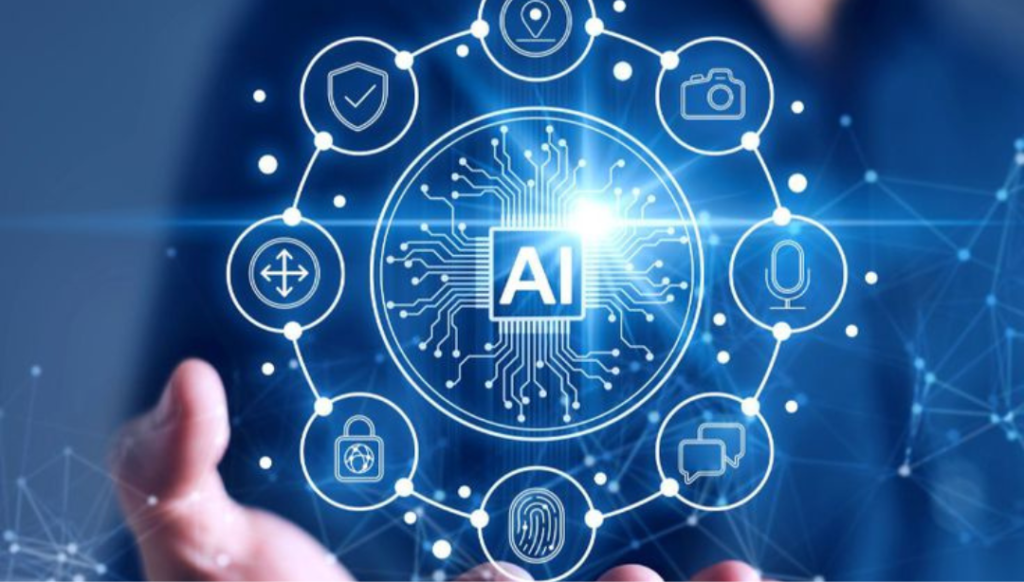
Artificial Intelligence refers to the ability of computer systems to perform tasks that typically require human intelligence. These tasks include learning from experience, recognizing images and speech, understanding language, solving problems, making decisions, and predicting outcomes.
Unlike traditional computer programs that follow fixed instructions, AI systems learn from data and improve over time. Technologies such as Machine Learning (ML), Deep Learning, Natural Language Processing (NLP), and Computer Vision allow AI to perform increasingly complex tasks with greater accuracy.
AI in Communication
Communication has become faster and more efficient because of AI. Email services automatically filter spam messages, messaging apps suggest smart replies, and language translation tools help people communicate across different languages instantly.
Voice assistants such as Siri, Google Assistant, and Alexa use AI to understand spoken language and respond to user commands. They can set reminders, answer questions, control smart home devices, play music, and provide weather updates, making everyday tasks much easier.
AI-powered chatbots are also transforming customer service. Businesses use them to answer customer questions 24/7, reducing waiting times while improving user satisfaction.
AI in Healthcare
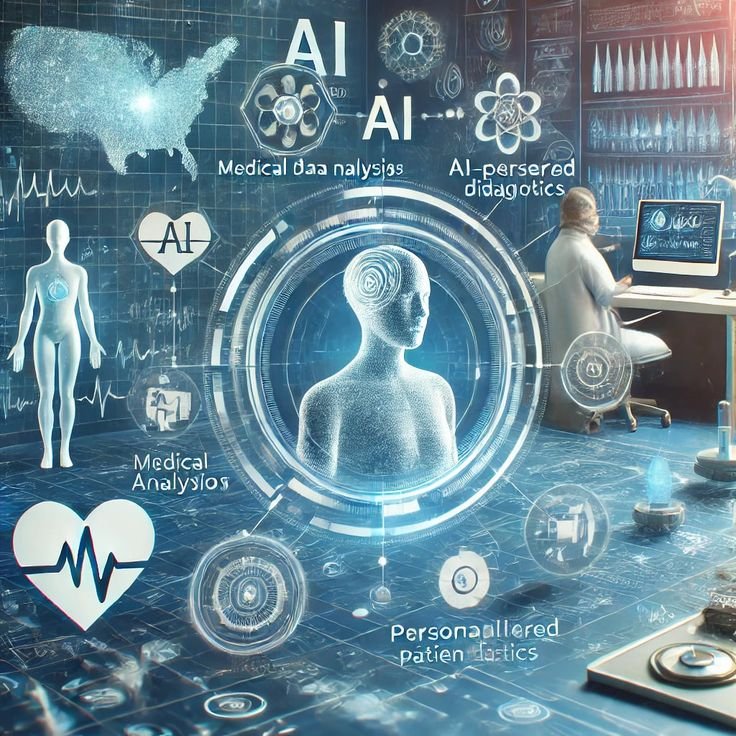
Healthcare is one of the industries benefiting the most from Artificial Intelligence. AI helps doctors diagnose diseases earlier, analyze medical images, predict health risks, and recommend personalized treatment plans.
Hospitals use AI to improve patient management and reduce administrative workloads. Wearable devices such as smartwatches can monitor heart rate, sleep quality, and physical activity, providing valuable health insights and encouraging healthier lifestyles.
Researchers are also using AI to speed up drug discovery and medical research, helping develop treatments more efficiently than traditional methods.
AI in Education
Education has become more personalized thanks to Artificial Intelligence. Online learning platforms use AI to recommend lessons based on a student’s learning speed and performance.
AI-powered tutoring systems provide instant feedback, identify areas where students need improvement, and suggest personalized study plans. Teachers can also use AI to automate grading, monitor student progress, and create more engaging learning experiences.
Students benefit from AI writing assistants, research tools, and language learning applications that make studying easier and more interactive.
AI in Entertainment
Most people interact with AI daily without realizing it. Streaming services recommend movies and TV shows based on viewing history, while music platforms create personalized playlists according to listening habits.
Social media platforms use AI algorithms to display content that matches users’ interests. Although this improves user experience, it also highlights the importance of responsible content recommendations and digital awareness.
AI is also used in video games to create intelligent opponents, realistic environments, and immersive gaming experiences.
AI in Online Shopping
Artificial Intelligence has completely transformed online shopping. E-commerce websites analyze customer behavior to recommend products that match individual preferences.
AI-powered recommendation systems increase customer satisfaction while helping businesses boost sales. Virtual shopping assistants answer customer questions instantly, while image recognition technology allows shoppers to search for products simply by uploading a photo.
AI also helps businesses manage inventory, predict customer demand, optimize delivery routes, and reduce operational costs.
AI in Transportation
Transportation has become smarter with the help of Artificial Intelligence. Navigation apps analyze real-time traffic conditions and suggest the fastest routes to destinations.
Ride-sharing companies use AI to match passengers with nearby drivers, estimate travel times, and calculate fares accurately.
The development of autonomous vehicles represents one of AI’s most exciting applications. Although self-driving cars are still evolving, AI is already improving road safety through driver assistance systems such as automatic emergency braking, lane detection, and collision warnings.
AI in Finance
Banks and financial institutions use AI to improve security and customer service. AI detects unusual transaction patterns that may indicate fraud, helping protect customers from financial crimes.
Many banking apps include AI-powered chatbots that assist customers with account information, transactions, and financial advice.
Investment firms also use AI to analyze market trends, manage portfolios, and make data-driven investment decisions.
AI in Smart Homes
Smart home technology has become increasingly popular due to Artificial Intelligence. AI-powered devices allow homeowners to control lighting, air conditioning, security cameras, and appliances using voice commands or smartphone apps.
Smart thermostats learn user preferences and automatically adjust temperatures to save energy. Smart security systems detect unusual activities and notify homeowners immediately, improving safety and convenience.
AI in the Workplace
Artificial Intelligence is transforming workplaces across industries. Businesses use AI to automate repetitive tasks, analyze large amounts of data, and improve decision-making.
Marketing professionals use AI to understand customer behavior, personalize advertising campaigns, and optimize website performance. Customer support teams use AI chatbots to provide instant assistance, while HR departments use AI to screen job applications efficiently.
Rather than replacing every job, AI is creating opportunities for people to focus on creative thinking, strategy, and problem-solving while automation handles routine tasks.
Benefits of Artificial Intelligence
Artificial Intelligence offers many advantages for individuals and businesses alike.
Some of the major benefits include:
- Increased productivity through automation.
- Faster and more accurate decision-making.
- Personalized user experiences.
- Improved healthcare services.
- Better educational opportunities.
- Enhanced customer support.
- Increased business efficiency.
- Smarter transportation systems.
- Improved cybersecurity and fraud detection.
- Continuous innovation across industries.
Challenges and Ethical Concerns
Despite its many advantages, AI also presents important challenges.
Privacy is one of the biggest concerns because AI systems often rely on collecting and analyzing large amounts of personal data. Protecting this information is essential to maintaining user trust.
Bias in AI algorithms can also lead to unfair outcomes if training data is incomplete or unbalanced. Developers must ensure AI systems are transparent, ethical, and inclusive.
Automation may also change the job market by reducing demand for some repetitive roles while increasing demand for digital and technical skills. Continuous learning and skill development will help people adapt to these changes.
The Future of Artificial Intelligence
The future of AI is incredibly promising. We can expect smarter healthcare systems, more advanced educational platforms, safer transportation, intelligent cities, and improved business automation.
Emerging technologies such as generative AI, robotics, and predictive analytics will continue to reshape industries around the world. As AI becomes more powerful, governments, businesses, and developers must work together to ensure it is used responsibly and ethically.
People who understand AI and learn how to work alongside it will be better prepared for future career opportunities and technological advancements.
Conclusion
Artificial Intelligence is transforming everyday life in ways that were once unimaginable. It is improving communication, healthcare, education, transportation, finance, entertainment, and countless other aspects of modern society. AI helps individuals save time, businesses increase efficiency, and communities solve complex problems.
However, as AI continues to evolve, responsible development and ethical use remain essential. By understanding both its opportunities and challenges, we can ensure that Artificial Intelligence becomes a force for innovation, inclusion, and positive change.
The future is not about humans competing with AI—it is about humans using AI wisely to create a smarter, more connected, and more sustainable world.
Hi, this is a comment.
To get started with moderating, editing, and deleting comments, please visit the Comments screen in the dashboard.
Commenter avatars come from Gravatar.
Great article! The examples from healthcare, education, transportation, and smart homes make it easy to understand how deeply AI has become part of everyday life.