
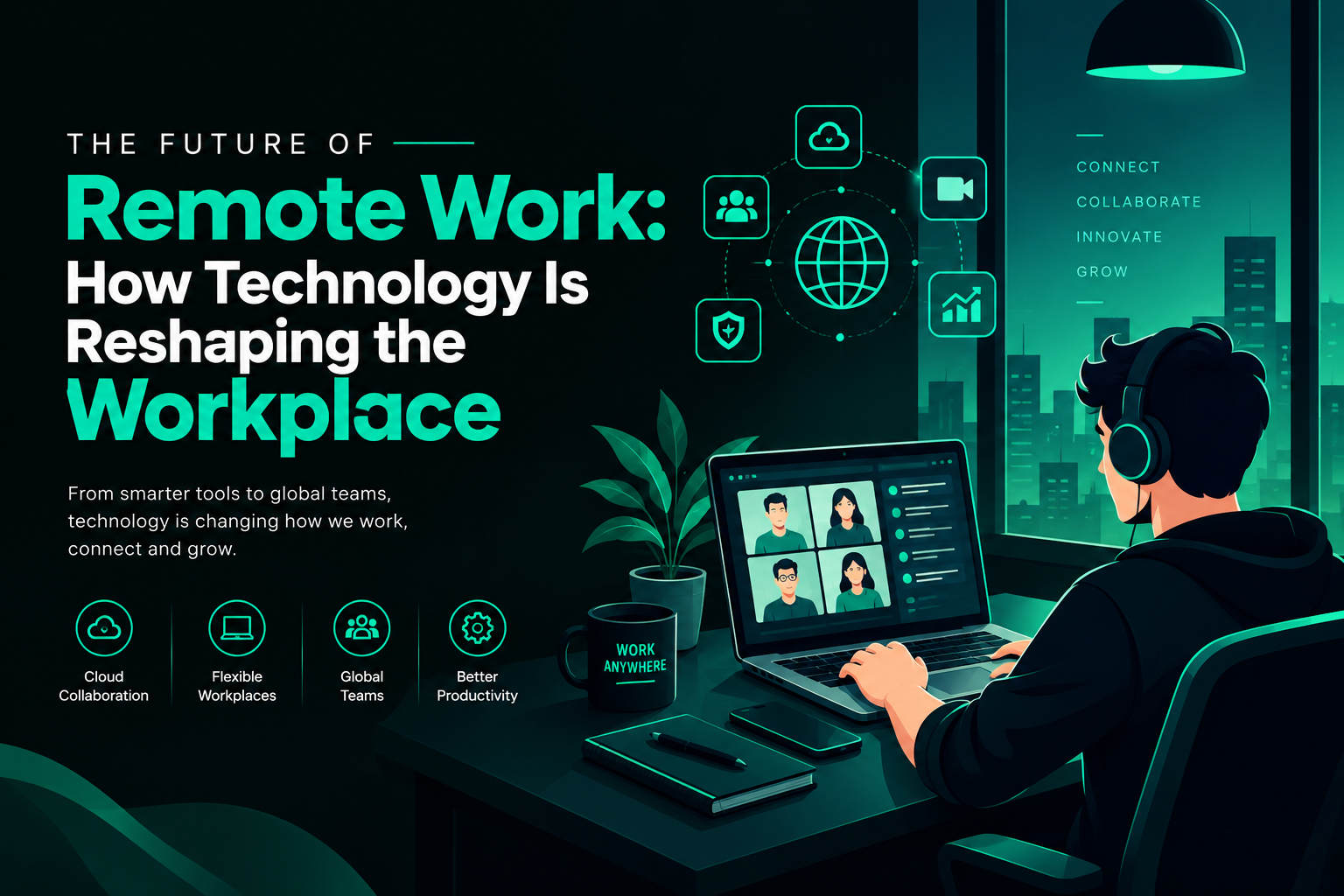
The Future of Remote Work: How Technology Is Reshaping the Workplace
Remote work has evolved from being a workplace perk to becoming a fundamental part of modern business operations. In recent years, organizations across the globe have embraced remote and hybrid work models, allowing employees to perform their jobs from virtually anywhere with an internet connection. Advances in technology, changing employee expectations, and the need for greater workplace flexibility have all contributed to this transformation. While remote work was once limited to freelancers and technology companies, it is now common across industries such as finance, education, healthcare, marketing, and customer service.
As businesses continue to adapt to a digital-first world, remote work is expected to play an even greater role in shaping the future of employment. Companies are investing in new technologies, improving digital collaboration, and rethinking traditional office environments. At the same time, employees are seeking careers that offer flexibility, work-life balance, and opportunities for professional growth. The future of remote work is not just about working from home—it is about creating smarter, more efficient, and more inclusive workplaces.
The Evolution of Remote Work
The concept of remote work has existed for decades, but it gained significant momentum with the development of high-speed internet, cloud computing, and digital communication platforms. Businesses gradually recognized that many tasks could be completed without requiring employees to be physically present in an office.
The global COVID-19 pandemic accelerated this transition dramatically. Organizations that had never considered remote work were forced to adopt it almost overnight. Despite initial challenges, many companies discovered that employees remained productive, communication could continue through virtual platforms, and business operations could be maintained successfully. This experience permanently changed the way employers view workplace flexibility.
Today, remote work is no longer considered a temporary solution. Instead, it has become a long-term strategy that offers benefits to both employers and employees.
Benefits of Remote Work
1. Improved Work-Life Balance
One of the greatest advantages of remote work is the flexibility it provides. Employees can better manage their professional responsibilities alongside personal commitments, reducing stress and improving overall well-being. Eliminating long daily commutes also gives workers more time for family, hobbies, exercise, and relaxation.
2. Increased Productivity
Contrary to earlier concerns, many studies have shown that remote employees can be just as productive—or even more productive—than office-based workers. Working in a comfortable environment with fewer interruptions allows many individuals to concentrate better and complete tasks more efficiently.
3. Cost Savings
Remote work creates financial benefits for both businesses and employees. Companies can reduce expenses related to office space, utilities, maintenance, and equipment. Employees save money on transportation, fuel, parking, meals, and professional clothing.
4. Access to Global Talent
Organizations are no longer restricted to hiring employees who live near their offices. Remote work enables businesses to recruit skilled professionals from different cities, countries, and time zones. This broader talent pool improves diversity, innovation, and competitiveness.
5. Environmental Benefits
Fewer daily commutes lead to reduced traffic congestion and lower carbon emissions. Companies also consume less electricity, water, and office resources, making remote work a more environmentally sustainable option.
Challenges of Remote Work
Although remote work offers numerous advantages, it also presents several challenges that organizations must address.
Communication Difficulties
Without face-to-face interactions, misunderstandings may occur more frequently. Teams must rely on video conferencing, messaging apps, and collaboration platforms to maintain clear communication.
Employee Isolation
Working remotely can sometimes lead to loneliness and reduced social interaction. Employees may miss the informal conversations and team-building opportunities that naturally occur in traditional office environments.
Maintaining Work-Life Boundaries
When home becomes the workplace, some employees struggle to separate work from personal life. This can result in longer working hours and increased stress if clear boundaries are not established.
Cybersecurity Risks
Remote work increases the need for strong cybersecurity practices. Organizations must protect sensitive company data through secure networks, multi-factor authentication, encryption, and employee cybersecurity training.
Performance Management
Managers must shift their focus from monitoring employee attendance to evaluating productivity, results, and overall performance. Trust and effective leadership become increasingly important in remote work environments.
Technology Driving the Future of Remote Work
Technology is the foundation of successful remote work. Modern digital tools enable employees to collaborate, communicate, and manage projects regardless of location.
Cloud computing allows teams to access files and applications securely from anywhere. Video conferencing platforms make virtual meetings efficient and interactive. Project management software helps teams organize tasks, track deadlines, and improve accountability. Artificial intelligence is increasingly automating repetitive tasks, analyzing business data, scheduling meetings, and enhancing customer support.
As virtual reality (VR) and augmented reality (AR) continue to develop, businesses may eventually create immersive virtual offices where employees interact as though they are physically present.
The Rise of Hybrid Work
Rather than choosing between fully remote and fully office-based work, many organizations are adopting hybrid work models. In a hybrid workplace, employees divide their time between working remotely and attending the office for meetings, collaboration, or special projects.
Hybrid work combines the flexibility of remote work with the advantages of face-to-face interaction. Employees enjoy greater autonomy while maintaining strong professional relationships and company culture. Many experts believe hybrid work will become the standard workplace model in the coming years.
Essential Skills for Remote Workers
Success in remote work requires more than technical knowledge. Employees must develop several important professional skills, including:
- Effective communication
- Time management
- Self-discipline
- Digital literacy
- Adaptability
- Problem-solving
- Collaboration using virtual tools
- Emotional intelligence
Continuous learning is also essential because technology and workplace practices continue to evolve rapidly.
The Employer’s Role
Organizations play a critical role in ensuring remote work remains successful. Employers should provide reliable digital tools, cybersecurity protection, employee training, and opportunities for career development. Regular feedback, virtual team-building activities, and mental health support can strengthen employee engagement and satisfaction.
Leaders must also focus on building trust rather than micromanaging employees. Clear expectations, measurable goals, and open communication create a productive remote work culture.
What the Future Holds
The future of remote work is likely to become more flexible, technology-driven, and employee-centered. Artificial intelligence will automate routine tasks, allowing workers to focus on creativity and strategic thinking. Companies will continue investing in cloud technology, cybersecurity, and digital collaboration platforms.
Global hiring will become increasingly common, enabling businesses to access specialized talent from around the world. Employees will have greater freedom to choose where and how they work, while organizations will prioritize productivity, innovation, and employee well-being over physical office attendance.
Governments and educational institutions may also adapt by introducing new policies and training programs that prepare future professionals for remote and hybrid careers.
Conclusion
Remote work has fundamentally changed the way people think about employment. What began as an alternative work arrangement has become a permanent feature of the modern workplace. While challenges such as communication, cybersecurity, and employee engagement remain, ongoing technological advancements continue to make remote work more effective and sustainable.
The future workplace will not be defined by office walls but by flexibility, collaboration, innovation, and digital connectivity. Organizations that embrace these changes and invest in both technology and their employees will be well-positioned for long-term success. Likewise, professionals who develop strong communication, adaptability, and digital skills will thrive in an increasingly remote and hybrid world. As technology continues to evolve, remote work will remain a powerful force shaping the future of business and employment worldwide.
view my website
😍😍
very usefull